
Shamatha Meditation
Shamatha practice, or calm abiding meditation, is the basis for all Buddhist practice. It is a practice that will help eliminate afflictive emotions (kleshas). The five principal kleshas are attachment, aversion, ignorance, pride, and jealousy. Tranquility practice aims to remedy kleshas and not just to feel good or be relaxed.
The main instruction is to allow our mind to rest one-pointedly on an object of focus. We concentrate the energy of our mind and direct it in a focused way. The technique's repeated application, done in a relaxed way, will settle the mind over time. The qualities of focus, relaxation, and diligence are important when cultivating tranquility meditation.
What is Mantra?
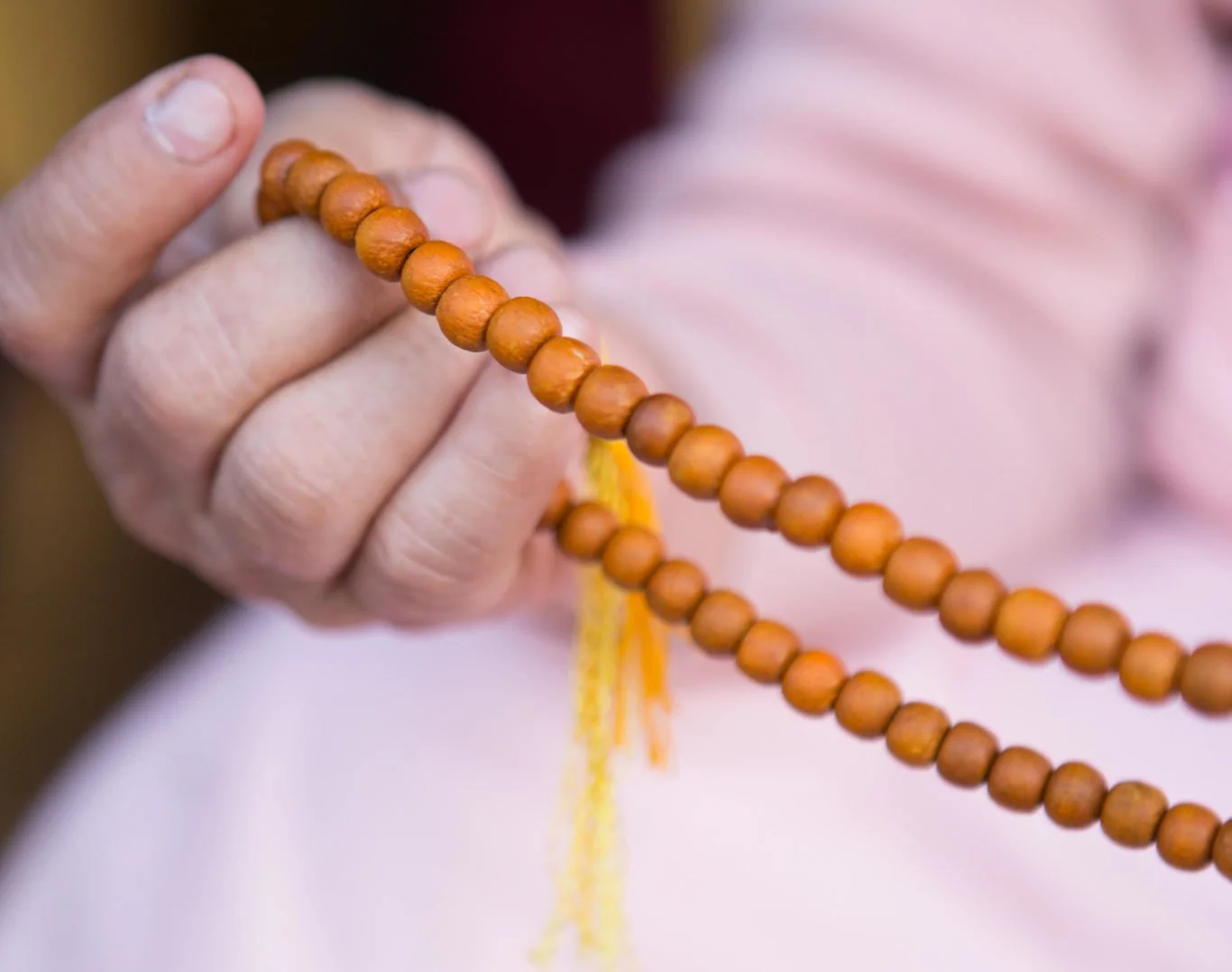
A mantra is a sacred word, syllable, or phrase used as an invocation or as an object of meditation; its use is far older than Buddhism, dating back thousands of years to India. In its Indian context, a mantra is considered a kind of magical spell that can even cause physical events to occur. But mantra is also a way to focus the mind and transform it from an ordinary state to an extraordinary one. Mantra is most closely associated with tantric Buddhism, but across Buddhist traditions, there are also mantra-like practices involving chanting and repeating phrases. Although these practices aren’t technically mantras, they function very much like them.
In the Vajrayana (Tibetan Buddhism) tradition, certain mantras or dharanis (long mantras) may invoke enlightened energies or call on the help of buddhas and bodhisattvas for protection. In Tibetan Buddhist schools, for example, mantras are central to the practice. “Om Mani Padme Hum” is a widely used mantra that represents and invokes Avalokiteshvara, the bodhisattva of compassion. By chanting the mantra, Tibetan Buddhists endeavor to become embodiments of compassion themselves. And many Zen Buddhist groups at the beginning or end of meditation chant the Heart Sutra, which ends with the mantra “Gate gate paragate parasamgate bodhi svaha” (“Gone, gone, gone beyond, fully gone beyond, awake, so be it!”)